
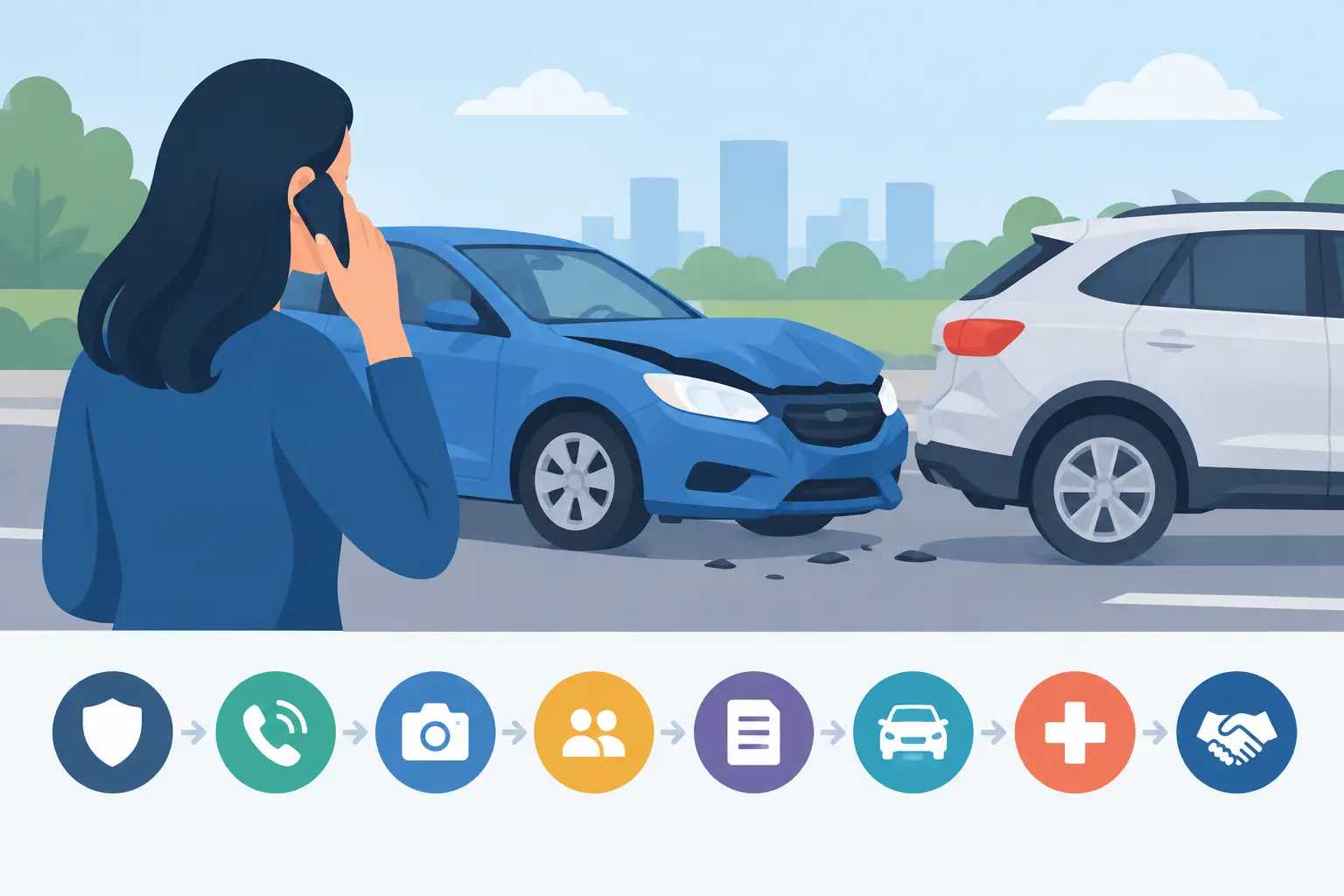
What to Do After a Car Accident in 8 Steps
The moments after a collision can feel disorienting, even when the damage looks minor. Searches for “what to do after car accident” usually happen when a driver is trying to make quick decisions while traffic, insurance questions, and safety concerns are all competing for attention. Start by protecting people first, then protect the information and vehicle condition needed to move forward.
What to Do After a Car Accident: Start at the Scene
1. Check for injuries and call 911 when needed
Take a breath and check yourself, your passengers, and anyone else involved. Call 911 immediately if someone is injured, there is a possible head, neck, or back injury, a vehicle is blocking traffic, there is a fire or fuel leak, or you do not feel safe at the scene.
Do not move someone who may be seriously injured unless there is an immediate danger, such as fire or oncoming traffic. Even after a low-speed impact, pain can take time to appear. If you develop symptoms later, seek medical attention and keep records of the visit.
2. Get to a safer location if you can
If the vehicles are drivable and there are no serious injuries, move out of active traffic when it is safe to do so. Turn on hazard lights. On a busy Los Angeles roadway or freeway, getting yourself and passengers away from moving traffic matters more than inspecting every scratch at the roadside.
If a vehicle cannot be driven safely, leave it where it is unless emergency personnel direct otherwise. A damaged bumper, loose wheel, leaking fluid, deployed airbag, cracked windshield, or steering change can make a vehicle unsafe to move.
3. Exchange information without debating fault
California drivers should exchange names, addresses, driver’s license information, license plate numbers, insurance company details, and vehicle registration information. It is also useful to note the make, model, and color of every vehicle involved.
Keep the conversation factual and brief. You can describe what happened to police and your insurer, but avoid arguing about fault or making statements such as “I’m sorry, it was all my fault.” The cause of an accident may involve road conditions, visibility, witness accounts, traffic signals, vehicle positions, and other facts that are not clear in the first few minutes.
4. Document the scene before vehicles are moved, if safe
Photos and notes can make the insurance and repair process much easier. Take wide photos showing the vehicle positions, roadway, intersection, traffic signs, weather, and nearby landmarks. Then photograph each vehicle from several angles, including close-ups of damage, license plates, broken glass, deployed airbags, tire marks, and any road debris.
If there are witnesses, ask for their names and contact information. Note the time, location, direction of travel, and a short description of what you remember while it is still fresh. If police respond, ask how to obtain the report number or report later.
Decide Whether Your Vehicle Should Be Driven
A car can look fine and still have damage that affects safety. Modern bumpers are designed to absorb impact, so the visible mark may not show damage behind the cover. A parking-lot impact can affect bumper reinforcement parts, sensors, mounting points, lights, cooling components, suspension alignment, or body panels.
Do not drive the vehicle if you notice warning lights, fluid leaks, rubbing tires, a crooked steering wheel, reduced braking, unusual noises, a hood or trunk that will not latch, damaged lights, or a windshield crack that blocks your view. The same caution applies after a rear-end collision if the bumper is loose or the exhaust appears damaged.
When there is any doubt, arrange towing rather than risking a second incident or turning a repairable problem into a larger one. A tow also gives a repair facility the opportunity to inspect the vehicle in a controlled setting instead of relying on a quick roadside look.
Report the Accident and Protect Your Claim
Contact your insurance company promptly
Report the accident to your insurer as soon as practical, even if you are still deciding whether to use your coverage. Provide the basic facts, photos, other driver information, and police report details if available. Ask for a claim number, the assigned adjuster’s contact information, and instructions for submitting documents.
Your policy and the circumstances of the accident determine what coverage may apply. Collision coverage may help repair your own vehicle, while liability coverage may apply when another driver is responsible. Uninsured or underinsured motorist coverage can matter if the other driver has no adequate coverage. Deductibles, rental coverage, and repair authorization vary by policy, so ask direct questions rather than assuming.
Handle California reporting requirements
In California, an SR-1 report generally must be filed with the DMV within 10 days when an accident causes injury, death, or more than $1,000 in property damage. This requirement can apply regardless of who caused the collision. An insurance claim does not automatically replace that filing, so verify your responsibilities based on your situation.
If the accident involved a hit-and-run, an injury, suspected intoxication, or significant property damage, contact law enforcement and follow their instructions. Preserve every document, email, claim reference number, repair estimate, and medical record connected to the incident.
Choose a Repair Process, Not Just an Estimate
An initial estimate is a starting point, not always the full repair scope. Damage hidden behind a bumper, fender, door, or wheel can only become visible after disassembly. A quality collision repair plan accounts for that possibility and communicates any needed supplement to the insurer before work continues.
Look for a repair facility that can evaluate the full vehicle, including structural damage, frame or unibody alignment, mechanical concerns, auto glass, paint, sensors, and safety-related components. Sending a vehicle from one provider to another for each issue can create delays and make accountability harder to follow.
At Onyx Auto Body, the process can begin with 24/7 free towing and damage documentation support, followed by a detailed inspection and repair plan. For a driver already managing an insurance claim, having towing, collision repair, paint work, glass replacement, and collision-related mechanical repairs coordinated in one place can reduce unnecessary back-and-forth.
Ask the Right Questions Before Repairs Begin
A clear repair conversation should leave you knowing what will happen next. Ask whether the estimate includes a full inspection, how hidden damage is handled, whether parts availability could affect timing, and how often you will receive updates. If your vehicle has cameras, parking sensors, radar, or driver-assistance features, ask whether the repair process includes the necessary scans, calibrations, or verification.
There can be trade-offs. A repair may take longer when parts are delayed or when additional damage is found after teardown. A shop that explains the reason for a delay and documents the work is usually giving you more useful information than one that simply promises a date before the vehicle has been fully evaluated.
You should also understand your payment responsibility. Your deductible may be due when repairs are completed, even if the insurer pays the remaining approved amount. Keep communications in writing when possible, especially if you are coordinating with an insurer, another driver, a rental company, or a lienholder.
Inspect the Vehicle Before You Leave
When repairs are complete, take a few minutes to review the vehicle in good lighting. Check panel gaps, paint color and finish, lights, trim, glass, and the areas that were repaired. Open and close repaired doors, the hood, or the trunk. Confirm that warning lights are off and that the vehicle feels normal during the first drive.
If something does not look or feel right, say so before you leave. A professional repair facility should be prepared to answer questions about the completed work and address legitimate concerns. Keep your final paperwork, warranty information, invoices, and photos together in case you need them later.
A car accident interrupts work, family plans, and everyday routines. Taking the next right step, rather than trying to solve every detail at once, gives you a safer path from the roadside to a vehicle that is properly evaluated and ready to return to the road.
Comments